


Frequently Asked Questions
Everything You Need to Know Before Getting Started
Philosophy: We know you're busy, and calling offices to ask basic questions adds unnecessary stress to an already difficult decision. This FAQ is designed to be so thorough that you have every answer you need, right here, right now, without picking up the phone. If your question isn't answered below, EMAIL us, and we'll add it immediately.
GETTING STARTED

-
Choose therapy if:
☑️ You're experiencing mental health symptoms (anxiety, depression, trauma responses, burnout)
☑️ You need to process past wounds causing present distress
☑️ You want to understand why your patterns developed
☑️ You have insurance coverage for mental health servicesChoose coaching if:
☑️ You're stuck in perfectionism, procrastination, or self-doubt but not in crisis
☑️ You've done therapy and now want strategic support for what's next
☑️ You need accountability to execute on goals you keep postponing
☑️ You're navigating a transition (career, leadership, identity shift)Choose a Collective Healing Circle if:
☑️ You want community support alongside your individual work in crisis
☑️ You're ready to explore patterns in a group setting
☑️ You resonate with a specific theme (boundaries, perfectionism, people-pleasing)
☑️ You prefer structured, curriculum-guided group experiences
-
No. We've found that 15-minute calls don't give us enough time to assess whether we're a good fit that only becomes clear in a full session.
We've designed this website to be comprehensive enough that you can make an informed decision about whether to schedule. Your first session serves as the "consultation", exploratory, and with no obligation to continue.
Do you have any questions before booking? Email us, and we'll respond within 1 business day.
-
We offer online scheduling.
Click HERE to choose from available appointment times.After you schedule:
☑️ You'll receive a confirmation email
☑️ You'll get a link to complete intake paperwork (takes 10-15 minutes)
☑️ You'll receive a reminder 24 hours before your session
☑️ For virtual sessions, you'll get your session link via emailImportant: Complete your intake paperwork at least 24 hours before your first session. If it's not completed, we may need to reschedule.
-
15-30 minutes depending on the service
-
Through the SimplePractice portal, you'll receive a secure link via email after scheduling.
FIRST SESSION EXPERIENCE

-
Your first therapy session focuses on understanding your story, exploring your goals, and determining if ABLE is the right fit. We'll talk about how therapy works, review confidentiality, and answer any questions, all at your own pace.
A glance at what’s covered during your first session:
Welcome & Settling In
We'll greet you warmly (no clinical coldness here), get you comfortable, and address any logistics or immediate questions.Begin Sharing Your Story
Protected space for you to share what brought you to therapy. You control the pace—no pressure to reveal more than feels comfortable. We'll ask questions to understand your experiences, not interrogate you.Goal Exploration
What does meaningful change look like for you? What would "success" in therapy mean? We'll explore what you hope to achieve, and then distinguish between what you think you should want and what you really want.How We Work Together
We'll explain our approach (narrative therapy, parts work, etc.), discuss session frequency, and clarify how our collaborative process differs from traditional therapy.Fit Assessment & Next Steps
We'll honestly evaluate whether our approach aligns with your needs. If yes, we'll schedule your next session and discuss treatment focus. If no, we'll provide referrals to other providers.You'll leave knowing:
☑️ Whether ABLE feels like the right fit
☑️ What to expect in ongoing sessions
☑️ Your session frequency and next appointment
☑️ How to reach us between sessions if neededWhat you won't experience:
☑️ Being rushed through your story
☑️ Judgment about your struggles
☑️ Generic advice that doesn't fit your life
☑️ Pressure to commit if you're unsure
-
Your first coaching session focuses on understanding where you are, where you want to go, and what's been standing in your way. We'll explore your goals with clarity—distinguishing between what you think you should want and what genuinely excites you—while honestly assessing obstacles.
A glance at what’s covered during your first session:
Coaching Fit Evaluation
We'll discuss whether our strategic, action-oriented approach aligns with your goals and working style. Coaching isn't therapy—we'll clarify the difference and ensure you're in the right service.Goal Exploration & Clarification
What do you want to achieve? What's the gap between where you are and where you want to be? We'll examine your goals with curiosity: Are they truly yours, or are they inherited expectations?Obstacle Identification
What's been preventing progress? Perfectionism? Time constraints? Competing priorities? Self-doubt? We'll name what's in your way with honesty, not judgment.Success Vision Creation
What does achievement look like for you specifically—not generic markers of success? We'll paint a clear picture of your desired outcome.Next Steps Framework
If we're a good fit, we'll outline your coaching journey, session frequency, package options, and what you can expect as we move forward.You'll leave knowing:
☑️ Whether coaching (vs. therapy or another resource) is right for your needs
☑️ A clearer vision of what you're working toward
☑️ The obstacles you'll address together
☑️ Your coaching structure and next session
-
Absolutely.
Your first session is exploratory for both of us. There's no obligation to continue after one session. Many people use the first session to:
☑️ See if they feel comfortable with the therapist/coach
☑️ Determine if the approach resonates
☑️ Assess whether they're ready for this work right nowAfter your first session, you can:
☑️ Schedule ongoing sessions (weekly, bi-weekly, monthly)
☑️ Take time to think about it and reach out when ready
☑️ Decide it's not the right fit and we'll provide referrals
☑️ Pause and return later when the timing is betterWe'll never pressure you to continue. The therapeutic relationship only works if you genuinely want to be there.
-
That's completely normal—and we're used to it.
Many of our clients are first-time therapy seekers. Here's what you should know:
Therapy is a conversation, not a lecture.
You won't sit silently while we analyze you. It's collaborative—you talk, we listen deeply, we ask questions, and we explore together.You're in control of what you share.
You're never required to talk about anything you're not ready to discuss. We'll follow your lead and pace.There's no "right way" to do therapy.
Some people cry. Some people don't. Some people talk a lot. Some people process quietly. All of it is valid.Progress isn't linear.
Some sessions feel like breakthroughs. Others feel like maintenance. Both are important parts of healing.You can ask questions anytime.
If you don't understand something we're doing or why we're asking a question, ask. We want you to feel informed and empowered.Common first-timer concerns we hear:
"What if I don't know what to say?"
We'll guide the conversation. You don't need to prepare a script."What if I cry?"
That's okay. We have tissues and zero judgment about emotions."What if I don't feel better immediately?"
Therapy takes time. Meaningful change usually happens over weeks/months, not after one session."What if I don't like my therapist?"
Fit matters. If we're not the right match, we'll help you find someone who is.
-
That's completely okay—and we'd rather know than have you stay in a relationship that isn't working.
Reasons people decide we're not the right fit:
☑️ Approach doesn't resonate (they want something more directive or less exploratory)
☑️ Personality mismatch (therapist-client chemistry matters)
☑️ Schedule conflicts (can't make regular appointments work)
☑️ Cost (even with sliding scale, it's not feasible)
☑️ They realize they need a different service (psychiatrist, couples therapist, etc.)What happens if we're not a fit:
☑️ We'll discuss it openly
No hard feelings. We'll talk about what you're looking for.☑️ We'll provide referrals
We'll recommend 2-3 other therapists/coaches who might be better aligned with your needs.☑️ We'll answer questions
What should you look for in a provider? What questions should you ask? We'll help you find the right match.☑️ No pressure to stay
You're under zero obligation. The therapeutic relationship only works if you genuinely want to be there.Your well-being matters more than our client roster.
SESSION DETAILS

-
All services are 60 minutes except groups:
☑️Individual Therapy: 60 minutes
☑️ Individual Coaching: 60 minutes
☑️ Clinical Supervision: 60 minutes
☑️ Collective Healing Circles (Groups): 90 minutesWhy 60 minutes?
Research shows 50-60 minutes is optimal for focused therapeutic work, long enough for depth, short enough to maintain focus and process between sessions.What if I need longer sessions?
Extended sessions (90 minutes) can sometimes be arranged for specific situations. We can discuss this during your first session. Extended sessions are charged at 1.5x the standard rate.Do sessions ever run over?
Sessions end at the scheduled time to respect both your time and other clients' scheduled appointments. We manage time carefully to ensure you get the full session without cutting off mid-thought.
-
Therapy:
Most clients start with weekly sessions to build momentum and establish the therapeutic relationship. As you progress (usually after 2-3 months), we may move to bi-weekly sessions. Some clients eventually transition to monthly maintenance sessions.Your frequency depends on:
☑️ Severity of symptoms
☑️ Your goals and timeline
☑️ Your schedule and availability
☑️ Your insurance coverage (if applicable, some plans limit sessions)
☑️ What feels sustainable for you financially and logisticallyCoaching:
Flexible based on your goals:☑️ Weekly: For intensive work and rapid progress (first 1-3 months)
☑️ Bi-weekly: For sustained accountability with more independence
☑️ Monthly: For maintenance and check-ins after initial intensive workGroups:
Weekly for 6 consecutive weeks (one session per week). Consistency is crucial for group cohesion and curriculum progression.Supervision:
Weekly or bi-weekly, based on:☑️ Your client contact hours (Florida requires 1 hour of supervision per 15 client hours)
☑️ Your developmental needs
☑️ Licensure timeline
-
Yes. We'll check in regularly about whether the current frequency is working or if we need to adjust.
-
You can choose:
In-Person:
Our office is located at:
835 East Park Avenue (Unit B)
Tallahassee, FL 32301Office details:
☑️ Free parking available (directly in front of our office location)
☑️ Accessible entrance
☑️ Comfortable, private therapy spaceVirtual (Telehealth):
Conducted via SimplePractice's secure, HIPAA-compliant video platformWho can access virtual:
☑️ Florida residents: Therapy, coaching, groups, supervision
☑️ Georgia residents: Therapy, coaching and virtual group)
☑️ Nationwide: Coaching and consulting onlyCan I switch between in-person and virtual?
Yes, as long as you're physically located in Florida or Georgia (for therapy). Many clients do hybrid, some weeks in-person and some virtual, based on their schedule.Which is better?
Both are equally effective. Choose based on:☑️ Your location and commute
☑️ Your comfort level (some people prefer home privacy, others prefer leaving home for sessions)
☑️ Your schedule (virtual offers more flexibility)We'll discuss your preference during scheduling.
-
Technical requirements:
Device:
☑️ Computer, laptop, tablet, or smartphone
☑️ Camera and microphone (built-in or external)
☑️ Updated web browser (Chrome, Firefox, Safari, Edge)Internet:
☑️ Reliable connection (at least 1.5 Mbps upload/download speed)
☑️ Wi-Fi or wired connection preferred over cellular dataOptional but helpful:
☑️ Headphones or earbuds (for better audio quality and privacy)
☑️ Charger (to avoid dying mid-session)Environment requirements:
Privacy:
☑️ A space where you won't be interrupted or overheard
☑️ Not your car in a public parking lot (unless it's truly your only option)
☑️ Not a coffee shop or shared workspace
☑️ Somewhere you can speak freely and process emotionsComfort:
☑️ Comfortable seating
☑️ Good lighting (so we can see each other clearly)
☑️ Minimal background noiseBefore your first virtual session:
☑️ Test your setup by clicking the session link 10 minutes early
☑️ Close unnecessary programs to improve connection
☑️ Silence phone notifications
☑️ Have water nearby
☑️ Position your camera at eye level (not looking up your nose or down at your head)What if I have technical issues during a session?
☑️ We'll troubleshoot quickly (check internet, refresh browser, restart device)
☑️ If we can't resolve it in 5 minutes, we'll switch to phone audio and continue (but audio will not be the version moving forward)
-
No, it's completely optional.
Web browser (no download needed):
You can join sessions by clicking the link we email you. It opens in your web browser—no app required.SimplePractice app (optional but convenient):
Available for iOS and Android. Many clients prefer the app because it offers:☑️ One-tap access to your session link
☑️ Easy appointment scheduling and rescheduling
☑️ Secure messaging with your therapist/coach
☑️ Payment management and receipt storage
☑️ Appointment reminders
☑️ Faster login (credentials saved)Our recommendation:
Try the web browser first. If you like the experience and plan to continue, download the app for convenience.
-
Sessions end at the scheduled time regardless of when you arrive.
Example:
If your session is scheduled for 2:00pm-3:00pm and you arrive at 2:15pm, your session will end at 3:00pm. You'll have 45 minutes together instead of 60.Why?
We schedule back-to-back appointments, and running over would impact the next client's time. This policy ensures everyone receives their full scheduled session.What if you're running late?
Less than 10 minutes late:
Text or call 850-212-6582 to let us know. We'll wait for you and use the remaining time.10-15 minutes late without notice:
Your session may still proceed with reduced time, but we may need to cover less material.More than 15 minutes late without notice:
Your session will be considered a no-show and subject to the full cancellation fee.What if you have a legitimate emergency?
Life happens. If you're late due to an accident, family emergency, or truly unavoidable situation, contact us as soon as possible. We'll work with you on a case-by-case basis.Best practice:
Join virtual sessions 5 minutes early. Arrive at the office 5-10 minutes early for in-person sessions to use the restroom, settle in, etc.
-
No, not at this time.
Why not?
We specialize in working with individuals. Couples and family therapy require different training, approaches, and dynamics.What if my partner wants to join a session?
Occasionally having a partner join one individual session for specific purposes (e.g., helping them understand your treatment, discussing a specific issue) can be arranged. However, this is NOT couples therapy—it's individual therapy with a guest.What if my problem is relationship-related?
We can absolutely work with you individually on relationship patterns, attachment issues, communication skills, and boundaries within relationships. You don't need couples therapy to work on relational issues.
PAYMENT & INSURANCE

-
Yes, for mental health counseling (therapy) ONLY.
Accepted insurance plans:
☑️ Aetna
☑️ Blue Cross Blue Shield (BCBS) - all Florida plans
☑️ Cigna
☑️ United Healthcare (including Optum, UMR, Oscar)Important clarifications:
What IS covered by insurance:
☑️ Individual therapy (60-minute sessions)
☑️ Initial assessment/intake session
☑️ Ongoing treatment for mental health conditionsWhat is NOT covered by insurance:
☑️ Professional coaching
☑️ Clinical supervision
☑️ Higher education consulting
☑️ Collective Healing Circles/groups
☑️ Workshops and speakingWhy isn't coaching covered?
Coaching is not a clinical service, so insurance companies don't reimburse for it. Only licensed mental health treatment is covered.What if my insurance isn't listed?
You have two options:Self-pay and we'll provide a superbill for you to seek out-of-network reimbursement (success varies by plan)
Find an in-network provider (we can provide referrals)
For select plans, we use third-party billing partners:
Some insurance plans are processed through Alma or Headway (third-party credentialing and billing platforms). This doesn't change your coverage or copay; it just streamlines the billing process and reduces administrative burden.You'll still work directly with ABLE. Alma/Headway just handles the insurance paperwork behind the scenes.
-
We verify your benefits BEFORE your first session so there are zero surprises.
Here's the exact process:
Step 1: You schedule your first session
Provide your insurance information during intake paperwork.Step 2: We verify your benefits (within 1-2 business days)
We contact your insurance company and confirm:☑️ Whether mental health counseling is covered
☑️ Your copay amount per session
☑️ Your deductible status (met or not met, and how much is left)
☑️ Your out-of-pocket maximum
☑️ Whether prior authorization is requiredStep 3: We email you a benefits summary
You'll receive a clear breakdown that looks like this:Example:
☑️ Copay: $30 per session
☑️ Deductible (if applicable): $500 (you've met $200, so $300 remaining)
☑️ Once deductible is met: You pay $30 copay per session
☑️ Until deductible is met: You pay $[full session rate] and it counts toward deductible
☑️ Prior authorization: Not requiredStep 4: You decide whether to proceed
If the cost works for you, great—keep your appointment. If not, we can discuss:☑️ Self-pay rates
☑️ Sliding scale (if available)
☑️ Referrals to lower-cost providers
☑️ Sliding scale providersWhat if verification takes longer than expected?
We'll keep your appointment but may reschedule if we can't verify in time. We'll NEVER see you without confirming costs first.What if my insurance says something different later?
Insurance companies sometimes provide incorrect information. If that happens, we encourage you to contact your insurance company for additional information.
-
In-Network:
We have a contract with your insurance company. You typically pay a lower copay (e.g., $20-50 per session), and we bill insurance directly.Out-of-Network:
We don't have a contract with your insurance company. You pay the full session rate upfront (e.g., $[Rate]), and we can provide a superbill for you to submit for potential partial reimbursement.How to know which you are:
If your plan is listed in our "Accepted Insurance" section:
You're in-network. Pay your copay only.If your plan is NOT listed:
You're out-of-network. Two options:Self-pay (pay full rate, get superbill for reimbursement)
Find an in-network provider (we can provide referrals)
Out-of-network reimbursement explained:
Some insurance plans offer out-of-network benefits, meaning they'll reimburse a percentage (often 50-80%) of the session cost after you pay upfront.
Example:
☑️ Session cost: $150
☑️ You pay: $150 upfront
☑️ You submit superbill to insurance
☑️ Insurance reimburses: $90 (60% of $150)
☑️ Your actual cost: $60How to check if you have out-of-network benefits:
Call the number on the back of your insurance card and ask:
☑️ "Do I have out-of-network mental health benefits?"
☑️ "What percentage do you reimburse for out-of-network therapy?"
☑️ "Do I need to meet a separate out-of-network deductible?"
☑️ "Is there a session limit for out-of-network providers?"We'll be able to provide a superbill with all necessary codes, but YOU are responsible for submitting it and following up with your insurance company.
-
Yes, if you use insurance.
What your EOB will show:
☑️ Provider name (A Blountiful Life Experience / Angela Blount)
☑️ Date of service
☑️ Service code (CPT code for "psychotherapy")
☑️ Amount billed
☑️ Amount covered by insurance
☑️ Amount you owe (copay/deductible)Who receives the EOB?
☑️ The policyholder (person whose name is on the insurance)
☑️ Sometimes you (if you're the policyholder or listed as authorized)What if I don't want my insurance to know I'm in therapy?
Choose self-pay. This is the only way to guarantee complete privacy. Self-pay means:☑️ No insurance involvement
☑️ No EOB sent
☑️ No EOB sent
☑️ No insurance company access to your informationWhat if I'm on my parent's/spouse's insurance and don't want them to know?
You have two options:
1. Self-pay (keeps it completely private)
2. Talk to the policyholder (they'll see the EOB, so they'll know you're attending therapy—though not what you discuss)
Can the insurance company see my session notes?
No. They only see:☑️ Your diagnosis
☑️ Dates you attended
☑️ Type of service (individual therapy, 60 minutes)They do NOT see what you discussed, your treatment plan details, or session content.
Can my employer see my therapy records?
No. Even if you have insurance through your employer, HIPAA prevents your employer from accessing your health information.
-
A superbill is an itemized receipt with all the information your insurance company needs to process out-of-network reimbursement.
What's included:
☑️ Provider name, credentials, and NPI number
☑️ Your name and insurance information
☑️ Date of service
☑️ CPT codes (procedure codes for the type of session)
☑️ ICD-10 codes (diagnosis codes)
☑️ Amount charged
☑️ Amount paidHow to use it:
Step 1: Pay for your session upfront (self-pay)
You pay the full session rate at time of service.Step 2: Request a superbill
Email after your session(s) and request a superbill. We typically provide them monthly or quarterly.Step 3: Submit to your insurance company
Most companies have an online portal where you upload the superbill. Some require mailing a physical copy. Check your insurance website for instructions.Step 4: Wait for reimbursement
Processing takes 2-6 weeks typically. Insurance will mail you a check or direct deposit (depending on your settings).Step 5: Follow up if needed
If you don't receive reimbursement within 6 weeks, call your insurance company to check status.Important:
We provide the superbill, but YOU are responsible for submitting it and following up. We cannot guarantee reimbursement—that's between you and your insurance company.Does self-pay with a superbill make sense for me?
It depends on:
☑️ Your out-of-network reimbursement rate (is it high enough to make it worthwhile?)
☑️ Your deductible (do you have to meet it first?)
☑️ How much administrative hassle you're willing to tolerateMany clients prefer in-network (simpler, lower cost) or pure self-pay (no insurance involvement at all). Out-of-network with superbills is the middle option.
-
Self-pay rates (no insurance):
Individual Therapy:
$150 per 60-minute intake (first) session | $125 per 60-minute sessionIndividual Coaching:
$150 per 60-minute intake (first) session | $125 per 60-minute sessionClinical Supervision:
$100 per 60-minute sessionCollective Healing Circles:
$450 per 6-week circle ($75 per 90-minute session)
Includes workbook and all materialsHigher Education Consulting:
Custom pricing based on project scopeWorkshops/Speaking:
Starting at $200 for 90-minute session
Custom pricing for keynotes and full-day eventsSliding scale available for mental health counseling.
-
Yes. We offer a limited number of sliding scale slots.
What is sliding scale?
Reduced session rates based on your current financial situation. Instead of paying the full rate, you will pay a lower rate depending on your circumstances.Who is it for?
Individuals experiencing genuine financial hardship who cannot afford our standard rates but are committed to the work.How many sliding scale spots are available?
2-3 at any given time. Once filled, we maintain a waitlist.How do I request sliding scale?
Via email
Email with subject line "Sliding Scale Inquiry" and include:☑️ Brief explanation of your financial situation
☑️ Whether you're open to the waitlist if no spots are availableYou’ll be directed to the portal to complete paperwork or submit documentation.
How long does sliding scale last?
Typically 3-6 months, then we reassess. If your financial situation improves, we'll transition you to standard rates. If it hasn't improved, we may continue sliding scale or discuss other options.What if sliding scale isn't available right now?
We'll add you to our waitlist and notify you when a spot opens (usually within 1-3 months). In the meantime, we can provide referrals to:☑️ Community mental health centers with income-based fees
☑️ Training clinics (lower cost with supervised interns)
☑️ Online therapy platforms with lower rates
-
When payment is due:
Therapy (with insurance):
Copay due at time of service (before or immediately after session)Therapy & Coaching (self-pay):
Full session rate due at time of serviceGroups:
Full circle fee ($450) due before first session OR via payment plan (2-3 installments)Supervision:
Due at time of sessionConsulting:
Per contract terms (typically 50% upfront, 50% upon completion)Payment methods accepted:
☑️ Credit cards: Visa, Mastercard, American Express, Discover
☑️ Debit cards: All major banks
☑️ HSA/FSA cards: Must have Visa/Mastercard/Discover logo for processing
☑️ Check: Accepted for consulting, workshop, and speaker servicesHow to pay:
☑️ Card on file
Save a card in your SimplePractice portal. We'll automatically charge it after each session. You'll receive an email receipt.Manual payment each session
Pay via the invoice that is sent to you before the session.☑️ In-person payment
Pay with card at the end of in-person sessionsWhat if my card is declined?
We'll email you as soon as possible. You'll have 48 hours to provide updated payment. If payment isn't received within 48 hours, future sessions may be paused until your account is current.Can I get a receipt?
Yes. You'll automatically receive an email receipt after every payment. You can also download receipts anytime from your SimplePractice portal.Can I use my HSA/FSA card?
Yes, for therapy sessions. HSA/FSA cards work like regular debit cards as long as they have a Visa, Mastercard, or Discover logo.Important for HSA/FSA users:
Coaching, consulting, and groups may NOT be eligible for HSA/FSA reimbursement (depends on your plan). Check with your HSA/FSA administrator before using your card for these services.
-
We understand that even reduced rates may not be feasible for everyone. Here are alternative options:
Lower-cost therapy options:
1. Community Mental Health Centers
☑️ Income-based sliding scale (sometimes as low as $5-20 per session)
☑️ Accept Medicaid
☑️ May have waitlists2. Training Clinics
☑️ Supervised graduate students provide therapy at significantly reduced rates ($20-40 per session)
☑️ High quality (students are closely supervised by licensed clinicians)3. Open Path Collective
☑️ National network of therapists offering $30-80 sessions
☑️ One-time $65 membership fee4. Online Therapy Platforms (lower cost)
☑️ BetterHelp: $60-90/week (unlimited messaging + weekly video)
☑️ Talkspace: Similar pricing
☑️ Cerebral: Medication + therapy bundles5. Support Groups (free or low-cost)
☑️ NAMI support groups (free)
☑️ DBSA support groups for depression/bipolar (free)
☑️ Local peer-led groups6. Crisis and short-term resources (free)
☑️ 988 Suicide & Crisis Lifeline (call or text)
☑️ Crisis Text Line: Text "HELLO" to 741741
☑️ SAMHSA National Helpline: 1-800-662-4357
SCHEDULING, CANCELLATIONS & CONTINUATION

-
Cancellation policy:
At least 24 hours' notice = No charge
Cancel or reschedule at least 24 hours before your appointment and you won't be charged.Less than 24 hours' notice = Full session fee
Late cancellations (less than 24 hours) are charged at the full session rate, even if you have insurance. Insurance companies do not reimburse for missed appointments, so this is always your responsibility.No-show (didn't show up, didn't cancel) = Full session fee
Missed appointments without any notice are charged at the full session rate.How to cancel or reschedule:
☑️ SimplePractice portal (fastest—cancels immediately)
☑️ Email
☑️ 850-212-6582What counts as 24 hours?
Exactly 24 hours before your scheduled appointment time.Example:
☑️ Appointment: Tuesday at 2:00pm
☑️ Deadline to cancel without fee: Monday at 2:00pmWhat if I have an emergency?
We understand emergencies happen:
☑️ Medical emergencies
☑️ Family crises
☑️ Car accidents
☑️ Sudden illnessContact us AS SOON AS POSSIBLE and explain the situation. We handle emergency cases on a case-by-case basis and may waive the fee at our discretion.
What does NOT count as an emergency:
☑️ Interrupt the toxic cycle of being everything to everyone else while disappearing from your own life
☑️ Overslept
☑️ Forgetting about your appointment
☑️ Being too busy
☑️ Not feeling like coming
☑️ Traffic (unless it's an accident)Why this policy exists:
When you miss an appointment without notice, that time could have been offered to another client who needs support. This policy:
☑️ Respects everyone's time
☑️ Ensures fair access to appointments
☑️ Honors your commitment to your own healingHow are cancellation fees collected?
We'll charge the card on file. You'll receive an email notification before charging, and a receipt after.
What if I need to cancel regularly due to work/childcare/etc.?
Let's talk about a more sustainable session frequency. If weekly doesn't work reliably, bi-weekly or monthly might be better.
-
We verify your benefits BEFORE your first session so there are zero surprises.
Here's the exact process:
Step 1: You schedule your first session
Provide your insurance information during intake paperwork.Step 2: We verify your benefits (within 1-2 business days)
We contact your insurance company and confirm:☑️ Whether mental health counseling is covered
☑️ Your copay amount per session
☑️ Your deductible status (met or not met, and how much is left)
☑️ Your out-of-pocket maximum
☑️ Whether prior authorization is requiredStep 3: We email you a benefits summary
You'll receive a clear breakdown that looks like this:Example:
☑️ Copay: $30 per session
☑️ Deductible (if applicable): $500 (you've met $200, so $300 remaining)
☑️ Once deductible is met: You pay $30 copay per session
☑️ Until deductible is met: You pay $[full session rate] and it counts toward deductible
☑️ Prior authorization: Not requiredStep 4: You decide whether to proceed
If the cost works for you, great—keep your appointment. If not, we can discuss:☑️ Self-pay rates
☑️ Sliding scale (if available)
☑️ Referrals to lower-cost providers
☑️ Sliding scale providersWhat if verification takes longer than expected?
We'll keep your appointment but may reschedule if we can't verify in time. We'll NEVER see you without confirming costs first.What if my insurance says something different later?
Insurance companies sometimes provide incorrect information. If that happens, we encourage you to contact your insurance company for additional information.
-
You can cancel or reschedule yourself; no phone call is needed. In fact, doing it on your own is preferred.
Option 1: SimplePractice Portal (Fastest & PREFERRED)
☑️ Log into your SimplePractice account
☑️ Go to "Appointments"
☑️ Click on the appointment you want to change
☑️ Click "Cancel" or "Reschedule"
☑️ If rescheduling, select a new time from available slots
☑️ ConfirmOption 2: Email/Text
☑️ Your name
☑️ Current appointment date/time
☑️ Whether you're canceling or rescheduling
☑️ If rescheduling, your availability for a new timeMake sure that this is done within the 24-hour time frame. If we don’t receive the message within this timeframe, you will be responsible for the late fee.
What if I cancel late at night or on a weekend?
The portal works 24/7. Email and phone messages are checked during business hours (M-Th 9am-6pm, F 9am-3pm), but the portal processes cancellations immediately.When will I be refunded if I had a prepaid session?
If you cancel with proper notice (24+ hours), any prepaid amount will be refunded within 3-5 business days to your original payment method.
-
We do not work outside of regular business hours; however, we do offer evenings and some weekends.
Current availability:
☑️ Monday-Thursday: 9 a.m.-7 p.m. (last appointment at 6 p.m.)
Weekends:
☑️ 1-2 Saturdays Per Month (9 a.m.-3 p.m.)
Evening/weekend slots fill quickly. If you need these times, mention it during scheduling and we'll do our best to accommodate.
Why limited evening/weekend availability?
We prioritize work-life balance and sustainable practice to avoid burnout—which means we model the boundaries we teach. Evening/weekend slots are reserved for clients who genuinely cannot attend during daytime hours due to work/school.What if I can only do evenings/weekends and you're booked?
We can:
☑️ Let you know if we receive an evening/weekend cancellations
☑️ Provide referrals to therapists/coaches with more flexible schedules might work
-
For ongoing clients:
We recommend scheduling your next appointment before leaving your current session (whether in-person or virtual). This ensures you get your preferred day/time before slots fill.For new clients:
We typically have availability 1-2 weeks out for initial consultations and first sessions. If you need an appointment sooner due to urgency, mention it when scheduling and we'll try to accommodate.For groups:
Collective Healing Circles open for registration 4 weeks before the start date and often fill within 1-2 weeks. Register early to secure your spot.What if I want to schedule multiple sessions in advance?
You can schedule as far out as you'd like (we recommend 4-6 weeks ahead for consistency). You can always cancel or reschedule with 24 hours' notice, so booking ahead doesn't lock you in permanently.What if you're booked and I need to get in sooner?
☑️ Check the cancellation waitlist (we'll notify you if someone cancels)
☑️ Ask about alternative times you hadn't considered (early morning, lunch break)
☑️ If it's urgent, let us know and we may be able to add a slot
-
For ongoing clients:
We recommend scheduling your next appointment before leaving your current session (whether in-person or virtual). This ensures you get your preferred day/time before slots fill.For new clients:
We typically have availability 1-2 weeks out for initial consultations and first sessions. If you need an appointment sooner due to urgency, mention it when scheduling and we'll try to accommodate.For groups:
Collective Healing Circles open for registration 4 weeks before the start date and often fill within 1-2 weeks. Register early to secure your spot.What if I want to schedule multiple sessions in advance?
You can schedule as far out as you'd like (we recommend 4-6 weeks ahead for consistency). You can always cancel or reschedule with 24 hours' notice, so booking ahead doesn't lock you in permanently.Absolutely. Breaks are normal and sometimes necessary.
Common reasons clients take breaks:
☑️ Financial constraints
☑️ Schedule changes (new job, travel, family responsibilities)
☑️ Reached a good stopping point and want to integrate what they've learned
☑️ Life got too chaotic and they need to stabilize before continuing
☑️ Just need a pauseHow breaks work:
1. Let us know you're taking a break
Email or mention it in your last session. This helps us understand it's intentional, not ghosting.2. We'll discuss whether to officially "close" your file or leave it "on pause"
☑️ On pause: You're still an active client, just not scheduling sessions right now
☑️ Closed: Formal termination (used for insurance purposes or if you're moving to another provider)Most clients prefer "on pause" because it's easier to return.
3. Return whenever you're ready
Returning after a short break (less than 3 months):
Just schedule your next appointment through the portal or email us. We'll pick up where we left off.Returning after a long break (3+ months):
We may ask you to complete a brief check-in form updating us on what's changed since we last met. This helps us tailor the session to where you are now.Will I lose my therapist/coach if I take a break?
No. Your file stays with the same provider. However, if you're gone for a very long time (1+ year) and our practice has changed significantly, we'll discuss whether continuing together still makes sense.Will I lose my sliding scale rate?
If you're on sliding scale and take a break, your rate is honored when you return—UNLESS someone else needs that sliding scale slot during your break. We'll discuss this before your break.
CLINICAL & CONFIDENTIALITY QUESTIONS

-
No. We do not prescribe medication.
Why not?
As licensed mental health counselors (LMHCs and LPCs), we are not authorized to prescribe medication. Only the following providers can prescribe psychiatric medications:☑️ Psychiatrists (MD or DO)
☑️ Psychiatric Nurse Practitioners (PMHNP)
☑️ Some Primary Care Physicians (for common medications like SSRIs)Can you still help me if I need medication?
Yes. Many of our clients take psychiatric medication prescribed by their psychiatrist or PCP and see us for therapy. This is called collaborative care, and it's very common.What if I think I need medication?
We can:
☑️ Discuss whether medication might be helpful based on your symptoms
☑️ Provide a referral to a trusted psychiatrist or psychiatric nurse practitioner
☑️ Coordinate care with your prescriber (with your written consent) to ensure you're getting comprehensive treatmentCan therapy work without medication?
For many people, yes. For others, medication + therapy together is most effective. It depends on:☑️ Severity of symptoms
☑️ Diagnosis (some conditions respond better to medication)
☑️ Your preferences
☑️ Your history (have you tried therapy alone? medication alone?)
We'll discuss this openly and help you make an informed decision.What if I'm already on medication?
Great. We can work together while you continue seeing your prescriber. Many clients find that therapy helps them process underlying issues while medication manages symptoms.
-
No, we do not at this time.
Why not?
We understand that emotional support animals can be an important part of someone’s well-being. At this time, we do not provide ESA letters. These evaluations involve specific clinical, ethical, and legal considerations, including assessing both the individual’s needs and the role of the animal, which require specialized processes and documentation.To ensure clients receive the most appropriate support, I would recommend that you seek a provider who specifically offers ESA evaluations. This allows me to remain focused on providing the highest quality care within the scope of my practice.
-
It depends on what you need.
What we CAN provide:
☑️ Verification of attendance letters
"[Name] has been attending therapy sessions since [Date]." Used for:☑️ Work attendance policies
☑️ School verification
☑️ General proof you're in treatmentFMLA paperwork (standard forms)
We can complete the clinical sections of FMLA forms if you're an established client and qualify for medical leave.☑️ General treatment summaries (with your consent)
Brief overview of your treatment for coordination with other providers.What we CANNOT provide:
❌ Disability documentation (SSDI, LTD, etc.)
Disability claims require extensive documentation, functional assessments, and often psychiatric evaluations. We're not equipped to provide this level of detail. You'll need a psychiatrist or psychologist who specializes in disability evaluations.❌ Custody evaluation letters
We don't provide opinions on custody or parenting fitness. This requires a forensic evaluation by a neutral third party, not your therapist.❌ Legal/court documentation
We're not forensic evaluators. If you're involved in legal proceedings, you'll need a forensic psychologist.❌ Academic accommodation letters
While we can verify you're in treatment, official academic accommodations require documentation from disability services or a psychologist who conducts psychoeducational testing.❌ Fitness-for-duty evaluations
These require independent evaluation, not treatment provider input.Why can't you provide these?
Dual relationship concerns. We're your therapist, which means we're not neutral. Legal/disability/custody matters require objective, impartial evaluations—not advocacy from your treatment provider.What if I need one of these things?
We can provide referrals to:☑️ Forensic psychologists (for custody, legal matters)
☑️ Disability evaluation specialists
☑️ Independent medical evaluators
-
What you share in sessions stays between us with important legal and ethical exceptions.
We are REQUIRED BY LAW to break confidentiality if:
🚨 You're at imminent risk of harming yourself
If you're actively suicidal with a plan and intent, we're legally required to take steps to keep you safe (call emergency contacts, contact authorities, or hospitalize if necessary).🚨 You're at imminent risk of harming someone else
If you make a specific, credible threat to harm an identifiable person, we're required to warn that person and notify authorities.🚨 There's suspected abuse or neglect
We're mandatory reporters for:☑️ Child abuse or neglect (anyone under 18)
☑️ Elder abuse or neglect (65+)
☑️ Abuse of a vulnerable adult (disabled or incapacitated)🚨 A court orders us to release records
Rare, but if a judge issues a court order (not just a subpoena—we'll fight subpoenas), we must comply.We MAY share information WITH YOUR WRITTEN CONSENT for:
☑️ Coordinating care with other providers
Example: Communicating with your psychiatrist about medication + therapy coordination☑️ Providing documentation you've requested
Example: Verification of attendance letter for work☑️ Insurance billing
We share your diagnosis, dates of service, and treatment type with insurance companies for reimbursement☑️ Clinical consultation
We may discuss your case (without identifying details) with other clinicians for consultation—this is normal and ethicalWhat's NOT shared without your consent:
❌ Your family members (even if they're paying for sessions)
❌ Your employer
❌ Your school
❌ Your partner
❌ Anyone elseWhat about group therapy/circles?
Group participants sign a confidentiality agreement promising not to share what others say outside the group. However, we CANNOT legally enforce this if someone violates confidentiality; there are no legal consequences (unlike with your therapist).
We set strong confidentiality norms and agreements, but you should assume some risk when sharing in groups.
Questions about confidentiality?
We'll review this thoroughly in your first session and answer any questions you have.
-
ABLE does not provide crisis intervention or emergency services.
If you're in immediate danger or experiencing a mental health emergency:
🚨 Call 911 (if immediate danger to self or others)
📞 Call 988 - Suicide & Crisis Lifeline
24/7 support for suicidal thoughts, mental health crises, substance abuse crises💬 Text "HELLO" to 741741 - Crisis Text Line - 24/7 text-based support
🏥 Go to your nearest hospital emergency room
Local Crisis Resources (Tallahassee):
☑️ Apalachee Center Crisis Stabilization Unit: (850) 523-3333 or (800) 226-2931. For immediate crisis situations, the Mobile Response Team can be reached at (800) 342-0774.
☑️ TMH Emergency Room: (850) 431-0911
☑️ HCA Mental Health Outpatient Emergency: (844) 706-8773
Brief overview of your treatment for coordination with other providers.What qualifies as a mental health emergency?
☑️ Active suicidal thoughts with a plan
☑️ Intent to harm yourself or others
☑️ Severe psychotic symptoms (hallucinations, delusions causing distress)
☑️ Extreme panic that won't resolve
☑️ Dissociation where you can't function or ensure your safety
☑️ Substance overdose or severe withdrawalWhat if I need support between sessions but it's NOT an emergency?
☑️ Check the schedule to see if an appointment slot is available.
☑️ 988 Lifeline (they help with distress, not just suicidal crises)
☑️ Crisis Text Line
☑️ A trusted friend or family member
☑️ Your safety plan (we'll create one together during therapy)Will we create a safety plan during therapy?
Yes. In your first few sessions, we'll develop a personalized crisis plan that includes:☑️ Warning signs that you're in distress
☑️ Coping strategies that work for you
☑️ People you can contact
☑️ Professional resources specific to your situation
☑️ Steps to take if you're in danger
-
Yes. SimplePractice is used by 200,000+ healthcare providers and has never had a data breach. They comply with all HIPAA security requirements.
-
We follow your lead.
If you see us in public:
☑️ We will NOT approach you or acknowledge you first
☑️ We will NOT introduce ourselves to people you're with or never disclose that you're a client
☑️ If you acknowledge us, we'll respond warmly but brieflyWhy?
To protect your privacy. We don't know if the people you're with know you're in therapy, and we don't want to put you in an awkward position.What if you want to say hi?
Go for it! We're happy to chat briefly. Just know we won't bring up therapy or say anything that would identify our relationship.What if we run into each other frequently (small town, gym, grocery store)?
We can discuss how to handle this during a session. Some clients prefer a quick wave and move on; others prefer we pretend we don't know each other. We'll follow your preference.What about social media?
We don't connect with current clients on personal social media (Facebook, Instagram, etc.) to maintain professional boundaries. You're welcome to follow ABLE's professional accounts for updates.
ABLE COLLECTIVE HEALING CIRCLES

-
Collective Healing Circles are 6-week, theme-based support groups for high performers navigating specific challenges.
Current themes:
☑️ Boundaries Without Guilt
☑️ Perfectionism Recovery
☑️ People-Pleasing & Attachment Patterns
☑️ Achievement Addiction & Rest as Resistance
Structure:☑️ Duration: 6 consecutive weeks
☑️ Session length: 90 minutes
☑️ Group size: 8-10 participants (small for intimacy)
☑️ Format: Curriculum-guided with workbook
☑️ Led by: Licensed therapist (Angela), not peer-ledWhat happens in each session:
Week 1: Naming the Pattern
Recognition without shame. What does this struggle look like in your life?Week 2: Understanding the Origins
Where did these patterns come from? Childhood, family, culture?Week 3: The Cost of the Pattern
What has this cost you? Relationships, health, joy, connection?Week 4: Meeting Your Parts
Internal Family Systems exploration of the different parts of youWeek 5: Practicing New Ways
What does recovery look like? New patterns to try.Week 6: Integration & Accountability
How do you sustain this after the group ends?Each 90-minute session includes:
☑️ Psychoeducation (teaching the concepts)
☑️ Experiential activities (creative, somatic, reflective)
☑️ Group sharing & processing (authentic connection)
☑️ Workbook exercises (for between sessions)not just what others need from you)
☑️ Optional accountability partnerships (peer support)What makes circles engaging (not just talking):
☑️ Creative expression (journaling, collage, drawing)
☑️ Somatic practices (grounding, breathwork, body awareness)
☑️ Role-play & experimentation (practicing new behaviors)
☑️ Storytelling & witnessing
☑️ Interactive prompts & games
☑️ Guided rest practicesVirtual or in-person?
Both options available. Virtual circles use Zoom; in-person circles meet at our Tallahassee office.Investment: $450 per 6-week circle (includes workbook)
Registration: Opens 4 weeks before each circle starts.
-
Yes, and many clients find this combination powerful.
Why combine individual + group:
Individual therapy = Deep, personalized processing of your story
Group circles = Community support, shared experiences, practicing new patterns in relationshipsHow they complement each other:
☑️ Therapy helps you understand your patterns
☑️ Group gives you a place to practice new behaviors with real people
☑️ Therapy processes what comes up for you in group
☑️ Group reminds you you're not alone in your strugglesScheduling considerations:
If you're doing both, we recommend:
☑️ Weekly individual therapy
☑️ Attend the 6-week circle when offered (circles run 3-4 times per year)
☑️ Use individual sessions to process group experiencesIs this too much?
For some people, yes. For others, it's exactly what they need. We'll discuss during your consultation whether combining makes sense for you.Cost considerations:
The cost of your individual sessions plus $450 for six weeks of group.
If this is financially prohibitive, prioritize individual therapy and join a circle later.
-
We strongly discourage missing sessions.
Why consistency matters in groups:
☑️ Group cohesion depends on everyone showing up
☑️ Each session builds on the previous one (curriculum is sequential)
☑️ Other members invest in your presence and story
☑️ Healing happens through witnessing the group's progression togetherWhat if I know I'll miss a session before signing up?
Let us know during registration. We'll evaluate:
☑️ Which session you'll miss (Week 1 or 6 is more critical than Week 3 or 4)
☑️ Whether missing that session significantly impacts your experience
☑️ Whether you're committed to the other 5 sessionsWe may:
☑️ Allow you to join if you'll only miss 1 session and it's not Week 1
❌ Ask you to wait for the next circle if you'll miss multiple sessions
What if I have an emergency and miss a session unexpectedly?
Life happens. Contact us ASAP and:
☑️ We'll email you a summary of what was covered
☑️ You'll still have the workbook exercises
☑️ You can rejoin the next weekCan I join a circle late (after Week 1)?
No. Week 1 is critical for:☑️ Group agreements and confidentiality
☑️ Getting to know other members
☑️ Setting the foundation for the workJoining late disrupts group cohesion and leaves you behind on the curriculum.
Can I leave a circle early?
Life emergencies happen (job loss, family crisis, health issues). If you must leave:☑️ Let us know as soon as possible
☑️ We'll discuss with the group (they'll notice your absence)
☑️ No refund for remaining sessions (you committed to the group)Refund policy for circles:
☑️ Before Week 1: Full refund minus $50 processing fee
☑️ After Week 1: No refunds (you've committed to the group)Bottom line: Only sign up for a circle if you can commit to attending all 6 sessions. If your schedule is unstable, wait for a better time.
ABLE CLINICAL SUPERVISION

-
We cover:
☑️ Case conceptualization and treatment planning
☑️ Skill development (interventions, assessment, crisis management)
☑️ Clinical identity exploration (developing your authentic therapeutic voice)
☑️ Countertransference and self-of-the-therapist work
☑️ Ethical dilemmas and professional development
☑️ Self-care and burnout prevention
-
We offer individual clinical supervision for Registered Mental Health Counselor Interns (RMHCI) in Florida working toward LMHC licensure.
Supervision format:
Individual supervision: 60-minute sessions, weekly or bi-weekly
-
Florida LMHC requirements we meet:
☑️ Qualified Supervisor registered with Florida Board
☑️ Supervision ratio: 1 hour supervision per 20 hours client contact
☑️ Documentation: Comprehensive supervision logs for licensure application
☑️ Supervision plan: Collaborative goal-setting and competency tracking
☑️ Crisis consultation: Available between sessions for urgent clinical issues
-
We use:
☑️ Person-centered supervision (you're not a blank slate—your lived experience matters)
☑️ Developmental model (we meet you where you are and help you progress)
☑️ Discrimination model (we tailor focus based on what you need each session)
-
We use:
How to apply:
1. Email with "Supervision Inquiry" in subject line
2. Include:
☑️ Your name and RMHCI number
☑️ Where you're working (agency, private practice, etc.)
☑️ Your current client load
☑️ What you're looking for in supervisionWe do not provide supervision for Registered Clinical Social Work Interns
ABLE CONSULTING & SPEAKING

-
Yes. We work with colleges and universities on:
1. Academic Advising Program Design & Training Supervision format:
☑️ Redesigning advising models (developmental, appreciative, proactive, case management)
☑️ Training advisors on evidence-based practices
☑️ Building holistic advising systems
☑️ Workflow improvement and caseload management2. Student Success & Retention Initiatives
☑️ Peer mentorship program development
☑️ First-generation and underrepresented student support
☑️ Student leadership development3. Canvas Course & Repository Development
☑️ Engaging online course design
☑️ Accessibility optimization
☑️ Faculty/staff training repositories
☑️ Interactive multimedia integration4. Peer Leadership & Ambassador Programs
☑️ Program design from recruitment through assessment
☑️ Student leader training curriculum
☑️ Authentic storytelling and marketing strategy
☑️ Sustainable program models5. Process Improvement & Operational Efficiency
☑️ Workflow mapping and redesign
☑️ Standard operating procedures (SOP) documentation
☑️ Staff role clarity
☑️ Cross-functional collaboration6. Mental Health Awareness Workshops
☑️ Supporting students in distress (faculty/staff training)
☑️ Trauma-informed practice
☑️ Burnout prevention
☑️ Difficult conversations and boundaries
-
How consulting works:
1. Free initial consultation - We discuss your challenges and goals
2. Custom proposal - We develop a detailed scope, timeline, deliverables, and pricing
3. Collaborative partnership - We work alongside your team (not as outside "experts" dictating solutions)
4. Sustainable hand-off - We provide documentation, training, and systems you can maintain independently
Investment:
Custom pricing based on project scope.Email us to schedule a consultation call.
☑️ Case conceptualization and treatment planning
☑️ Skill development (interventions, assessment, crisis management)
☑️ Clinical identity exploration (developing your authentic therapeutic voice)
☑️ Countertransference and self-of-the-therapist work
☑️ Ethical dilemmas and professional development
☑️ Self-care and burnout prevention
-
Angela speaks on:
☑️ High-Performer Burnout & Achievement Addiction
☑️ Mental Health Awareness for Faculty, Staff & Student Affairs Professionals
☑️ People-Pleasing, Boundaries & Authenticity
☑️ Neurodivergence in Higher Education
☑️ People-Pleasing, Boundaries & Authenticity
☑️ Relational Trauma & Attachment Patterns
☑️ Creating Cultures of BelongingWhat you get:
☑️ Engaging, story-driven presentations (no death-by-PowerPoint)
☑️ Research-backed content in accessible language
☑️ Interactive elements (not passive lectures)
☑️ Real talk about uncomfortable topics
☑️ Practical takeaways audiences can use immediately
☑️ A speaker who brings humor, heart, and Brooklyn energyAvailable formats:
☑️ Keynote addresses: 45-60 minutes
☑️ Workshops & training: 90 minutes - half day
☑️ Panel discussions: As panelist or moderator
☑️ Virtual or in-personInvestment:
☑️ Starting at $300 for 90-minute workshops
☑️ Custom pricing for keynotes and full-day events
☑️ Travel expenses are included for in-person eventsHow to book:
1. Email with subject line "Speaking Inquiry."
Include:
☑️ Event name, date, location
☑️ Audience size and type (faculty, students, professionals)
☑️ Desired topic
☑️ Format (keynote, workshop, panel)
☑️ Budget range2. We'll respond within 2 business days with:
☑️ Availability confirmation
☑️ Pricing
☑️ Sample topics/outlines
☑️ Format (keynote, workshop, panel)
☑️ Budget range3. Contract and logistics
☑️ Once confirmed, we'll send a speaking agreement and coordinate details.Need a speaker bio or headshot?
Email and we'll send our speaker kit.
LOCATION, CONTACT, & RECORDS
-
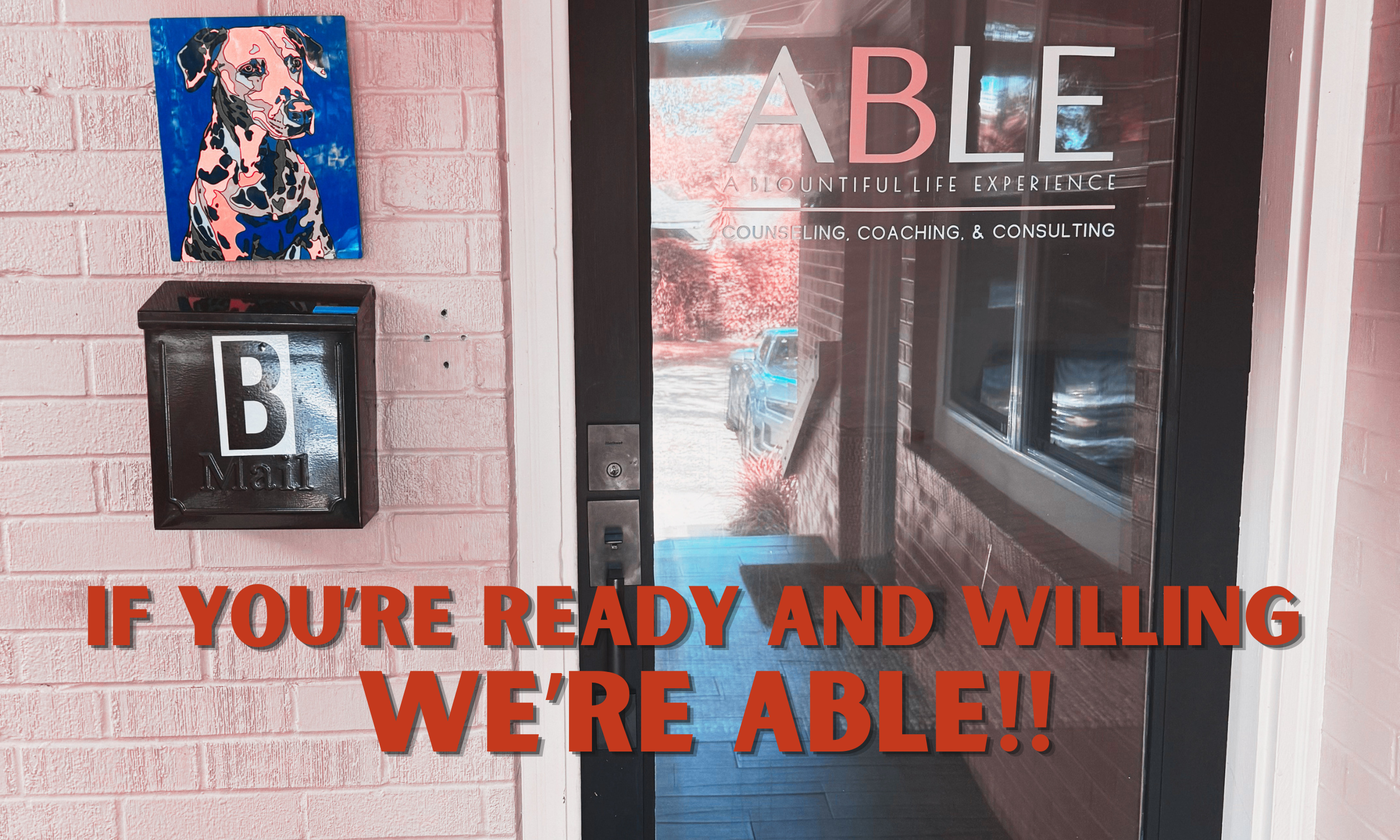
Office address:
835 East Park Avenue (Unit B)
Tallahassee, FL 32301Parking:
Free parking is availableOffice Hours: M-Th 9am-6pm, F 9am-3pm EST, S (appointment only)
Response times:
☑️ Emails - 24-48 hours
☑️ Phone: We make every attempt to respond to voicemails within 48 hours
☑️ SimplePractice messages: Within 1 business dayWhat to expect when you arrive:
In-person sessions:
☑️ Arrive 5-10 minutes early for your first session
☑️ Come in and have a seat
☑️ Bathrooms availableOffice environment:
We've designed a warm, comfortable space—no sterile waiting rooms or clinical coldness. You'll feel at ease from the moment you walk in.Need help finding us?
Call or text 850-212-6582 when you arrive and we'll guide you in.
-
Yes. Under HIPAA, you have the right to access your records.
How to request:
Submit a written request
Email with subject line "Records Request" and include:☑️ Your full name
☑️ Date of birth
☑️ Date range of records you're requesting
☑️ Where to send them (email, mail, pick up)You'll receive:
☑️ Session Summary
☑️ Diagnoses
☑️ Assessment results
☑️ Any other clinical documentation
Session notesWhat's NOT included:
☑️ Process notes (therapist's personal observations and impressions not part of official record)
☑️ Notes about third parties (if someone else was discussed and didn't consent)Why request your records?
Common reasons:
☑️ Transferring to a new therapist
☑️ Applying for disability
☑️ Personal records for yourself
☑️ Legal reasons (though we encourage you to consult a lawyer first)Will requesting records damage our relationship?
Not at all. It's your legal right and we support informed clients.
-
We use SimplePractice, a HIPAA-compliant electronic health record (EHR) system.
Your information is:
☑️ Encrypted during storage and transmission (military-grade encryption)
☑️ Password-protected with multi-factor authentication
☑️ Backed up securely in HIPAA-compliant cloud servers
☑️ Never shared without your written consent (except legally required situations)Who has access to your records?
☑️ Your therapist/coach
☑️ Administrative staff (for scheduling and billing only—not clinical content)
☑️ Clinical consultants (with identifying information removed)
☑️ Insurance companies (only diagnosis, dates, and billing codes—not session content)
-
We use SimplePractice, a HIPAA-compliant electronic health record (EHR) system.
Your information is:
☑️ Encrypted during storage and transmission (military-grade encryption)
☑️ Password-protected with multi-factor authentication
☑️ Backed up securely in HIPAA-compliant cloud servers
☑️ Never shared without your written consent (except legally required situations)Who has access to your records?
☑️ Your therapist/coach
☑️ Administrative staff (for scheduling and billing only—not clinical content)
☑️ Clinical consultants (with identifying information removed)
☑️ Insurance companies (only diagnosis, dates, and billing codes—not session content)Records are retained for 7 years per Florida law, then securely destroyed.
What if ABLE closes or my therapist retires?
You'll be notified in advance and given the option to:
☑️ Transfer records to your new provider
☑️ Receive a copy for your personal records
☑️ Have records securely destroyed